Fifteen Minutes of Fortune: Why 888 Seconds Might Be the Smartest Slot Session in Britain
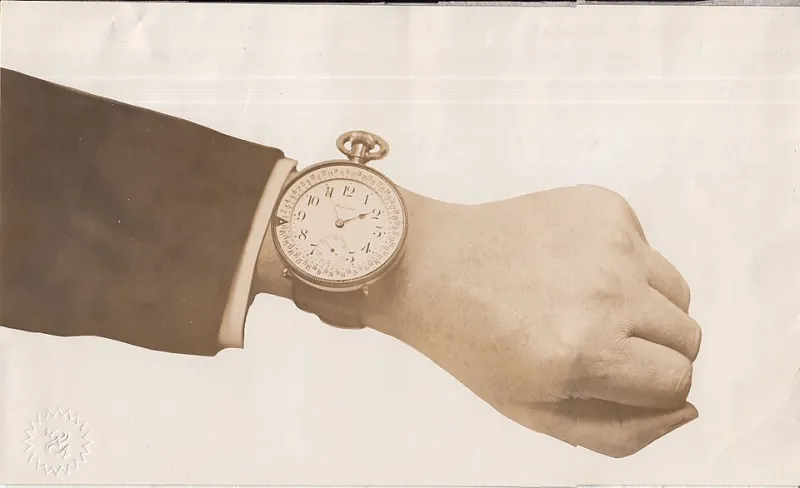
Photo: Unknown authorUnknown author, Public domain, via Wikimedia Commons
There's a peculiar magic to the number 888 here at RR888. It's our name, our mascot, our lucky charm rolled into one. But this week, we want to use it for something a bit more useful than superstition. We want to turn 888 into a mirror.
Because 888 also happens to be a number in seconds — and 888 seconds is just a shade under fifteen minutes. Which, as it turns out, might be exactly how long you should spend on a slot session before calling it a day.
What the Numbers Actually Say
Let's start with some honest maths. UK slots typically spin every two to five seconds when you're playing at a normal pace. Take a middle-of-the-road figure of three seconds per spin, and a fifteen-minute session works out at roughly 300 spins. That sounds like a lot, but here's the kicker: anyone who's ever fallen down a slots rabbit hole knows that 300 spins can vanish in what feels like the time it takes to make a cuppa.
Gambling Commission data has consistently shown that online slot sessions can stretch far longer than players intend. Industry research and safer gambling surveys repeatedly find that a meaningful chunk of online players lose track of time entirely — hence why UK-licensed operators are now required to offer reality checks: those periodic pop-ups telling you how long you've been playing and how much you've won or lost.
The uncomfortable truth is that the average session for regular slots players often runs well beyond the fifteen-minute mark. Surveys of online gamblers have found sessions frequently lasting thirty minutes to an hour or more, particularly in the evening when the telly's on and the phone's within reach.
Why Time Flies When the Reels Are Spinning
Slots are engineered — quite legally, quite openly — to be immersive. There's no clock on the screen. There's no natural stopping point like the end of a football match or the last hand of blackjack. The music is pleasant, the near-misses are dramatic, and every spin offers a fresh hit of anticipation.
Psychologists call this 'loss of time awareness', and it's one of the reasons the modern reality check requirements were introduced. Dr Jane Rigbye, who has researched safer gambling extensively in the UK, has noted that simple, well-timed interruptions can help players re-anchor to real time and real money. It's not about telling anyone what to do — it's about making sure the decision to carry on is a conscious one.
The 888-Second Session: A Limit You Can Actually Keep
Here's where our lucky number earns its keep. Plenty of responsible gambling advice tells players to 'set a session limit', but vague advice rarely survives contact with a shiny bonus round. What works is something specific, memorable and — crucially — achievable.
That's the pitch: 888 seconds. One session. Then you're done.
Why does this work better than 'I'll play for a bit'? A few reasons:
- It's finite and known in advance. You're not deciding when to stop mid-session (the hardest moment); you decided before you started.
- It's short enough to stick to. Fifteen minutes is a snack, not a feast. Willpower isn't required to hold the line for long.
- It's easy to enforce. Stick a kettle timer on, use your phone's clock app, or better still, use the session reminders built into every UK-licensed casino.
- It fits real life. Fifteen minutes is a bus ride, a tea break, the gap between Match of the Day and bed.
Think of it as the slots equivalent of a sprint rather than a marathon. You get your entertainment, your buzz, your spin of the reels — and then you get on with your evening.
What £10 Looks Like in 888 Seconds
Let's make it concrete. Say you've budgeted a tenner. At 20p a spin over 300 spins, that's £60 of total staking — which is exactly why the outcome of any short session is wildly unpredictable. You might be up, you might be down, and over such a small sample, luck genuinely dominates.
And that's the point. A short session embraces the randomness rather than fighting it. The player who grinds on for two hours isn't being more skilful — slots have no skill element — they're simply giving the maths more time to grind them down, because every slot is built with a house edge that only reveals its true shape over the long run.
Making It a Habit
If you fancy giving the 888-second session a go, here's our quick-start guide:
- Decide your stake per spin before you start — and keep it a small fraction of your total budget.
- Set a timer for 15 minutes. Physical timer, phone alarm, whatever works.
- Use the built-in reality checks on your chosen site, and treat them as a friendly nudge rather than an annoyance.
- When the timer goes, stop. Win or lose. That's the whole discipline.
- Keep a simple tally — a note on your phone of each session's result. Over a month, you'll have a far clearer picture than any 'feeling' will give you.
And if you find 888 seconds impossible to stick to — if you're chasing that timer down, extending, topping up — that's not a discipline problem to be ashamed of; it's a signal worth listening to. Organisations like GamCare and BeGambleAware offer free, confidential support, and every UK-licensed site offers deposit limits, cool-off periods and self-exclusion tools.
Eight Minutes of Luck, Eight Hundred and Eighty-Eight Seconds of Sense
We'll always love 888 as a lucky number. But maybe the luckiest thing about it isn't the fortune it brings — it's the discipline it inspires. Fifteen minutes of fun, honestly enjoyed, then back to real life with your budget intact.
That's not superstition. That's just good sense, dressed up in our favourite number.
If gambling stops feeling fun, visit begambleaware.org or gamcare.org.uk for free support.