Batter, Bits and Bankrolls: What Does an Affordable Treat Actually Cost in 2025?
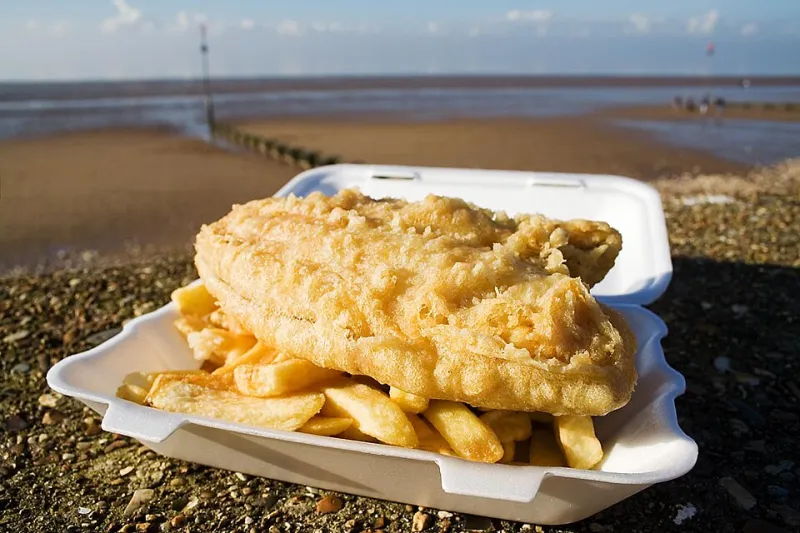
Photo: Andrew Dunn, CC BY-SA 2.0, via Wikimedia Commons
There's a sacred document pinned somewhere in every British household. It's not a mortgage statement or a wedding invitation. It's the mental ledger of what counts as a justified little treat — and in 2025, that ledger is under more scrutiny than ever.
We wanted to know what the nation's affordable treats actually look like now the prices have all shuffled upwards. So we asked. And the answers, perhaps unsurprisingly, revolve around batter, bread and the occasional spin.
The Chippy Tea: Still the King of Comfort
"Eight quid for cod, chips and gravy," says Dave, 54, a joiner from Leeds. "Used to be a fiver. Still worth it, mind. Cheaper than therapy and it comes with scrapings."
Dave's not wrong about the trajectory. The chippy tea has crept up in price like everybody else, but it retains a certain untouchable status. It's not just food — it's an event. You plan the route home past the good chippy. You judge the one near the bus stop harshly. And when payday lands on a Friday? That's not a coincidence. That's tradition.
The Meal Deal Economy
For the weekday crowd, the meal deal remains the workhorse of the treat ledger. A meal deal from one of the big supermarket chains still hovers around the £3.50 mark — a figure so culturally significant that people have built entire ranking systems around sandwich selection strategy.
"It's £3.60 a day, which is £18 a week, which is... look, don't do the maths," laughs Priya, an admin worker from Croydon. "It's the one thing I don't feel guilty about."
And there's the thing — guilt-free is the operative word. An affordable treat isn't defined by the price tag alone. It's defined by whether it improves your day without ruining your week.
The Scratchcard and the Spin
Then there's the gambling-shaped end of the treat spectrum. The scratchcard at the counter. The cheeky £1 coin in the seaside pusher. And increasingly, the micro-deposit on a slots app — a couple of quid here, a fiver there, treated with the same casualness as the meal deal.
"I put £2 on the spins on a Sunday night," says Colin, a retired postman from Swansea. "Eighty-eight pence if I'm feeling lucky, because why not. If it's gone, it's gone. Same as if I'd bought a pasty."
Colin's approach — a fixed, small amount, decided before he starts, never topped up — is exactly the kind of thinking that keeps the treat a treat. The moment a £2 spin session becomes a £20 chase, it's left the treat ledger entirely and entered different, considerably less pleasant territory.
The 88p Rule of Thumb
At RR888 we're obviously partial to the number 88, so here's our entirely unofficial framework for keeping your spinning in treat territory:
- 88p to £2 is a scratchcard-level spend. Harmless fun, expect nothing.
- £5 is a chippy tea. A proper little session. Still firmly in treat land.
- £8.80 is a takeaway for two. Fine occasionally, but you should notice it.
- Anything that makes you wince at the till — or the deposit screen — isn't a treat. It's a problem.
The golden rule: the spins come out of the same mental jar as the meal deal and the chippy, not the jar that pays the leccy bill. If the jars are getting muddled, step away from the reels.
Know When the Treat Stops Treating
We'd be remiss not to say it plainly: gambling should never be a solution to a bad week, only a small garnish on a good one. If you're spending more than you planned, chasing losses, or spinning to escape rather than enjoy, that's your cue to take a break. Set deposit limits, use reality checks, and if things feel off, GambleAware (begambleaware.org) and GamStop are there to help, free and confidential.
Because the best affordable treat — whether it's batter, a sarnie or a lucky 88p spin — is one that costs exactly what you decided beforehand, delivers a bit of joy, and leaves you looking forward to the next one.
Now if you'll excuse us, the chippy closes at eight.